Home > Pregnancy > Third Trimester
Third Trimester: "Nobody Warns You About Your Ankles in Month Seven"
Why the swelling starts, why "drink more water" and "cut the salt" only half-work, and the simple graduated fix you put on before the day starts, so your shoes still fit at 3pm
You notice it at the end of the day first.
Your ankles look different. Not swollen exactly, just… fuller.
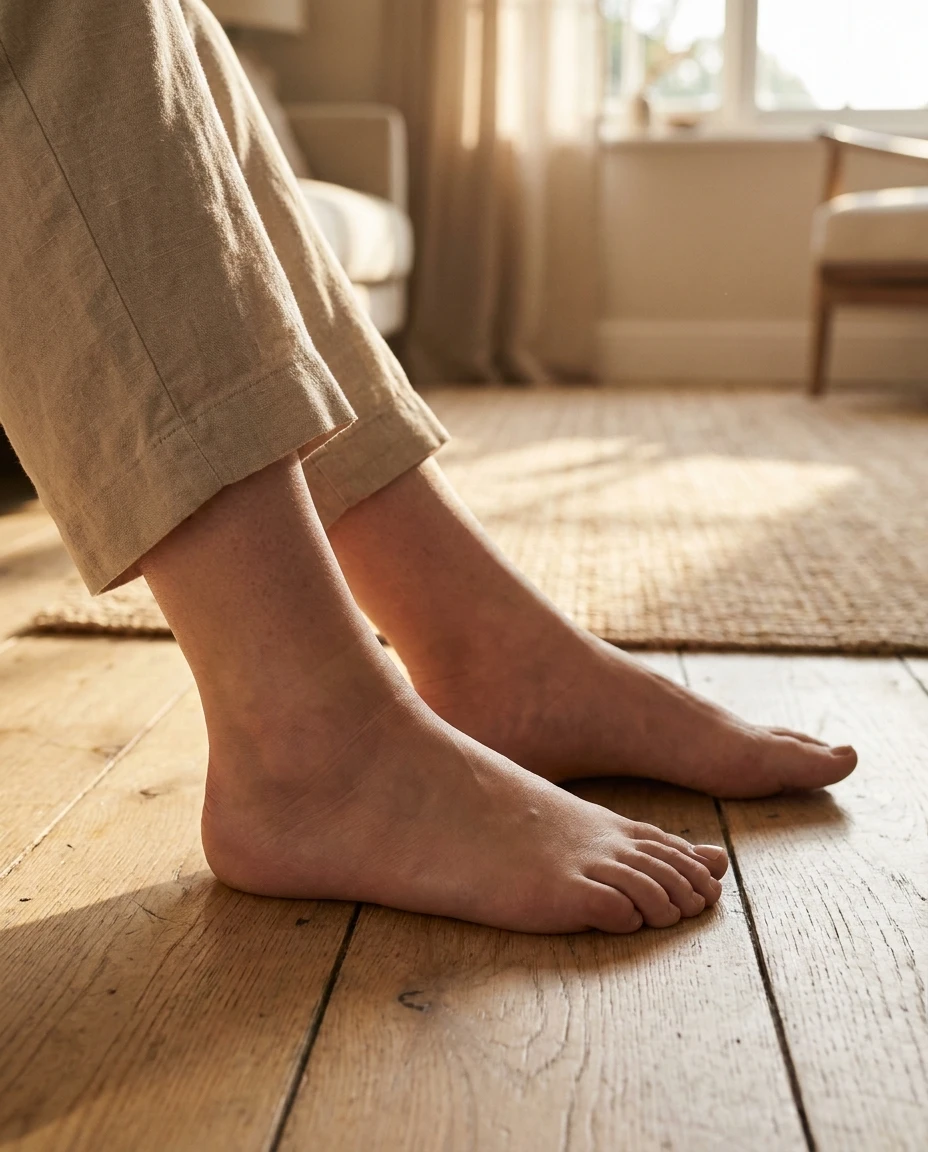
There's a sock line pressed into the skin that stays there a while after the sock comes off. And when you press it with a thumb, the dent takes a second longer to come back than it used to.
If you're in your third trimester and that sounds familiar, the next five minutes are worth your time.
Because what's happening to your legs has a simple, mechanical explanation. And once you see it, the fix is almost annoyingly simple.
Then it's the shoes
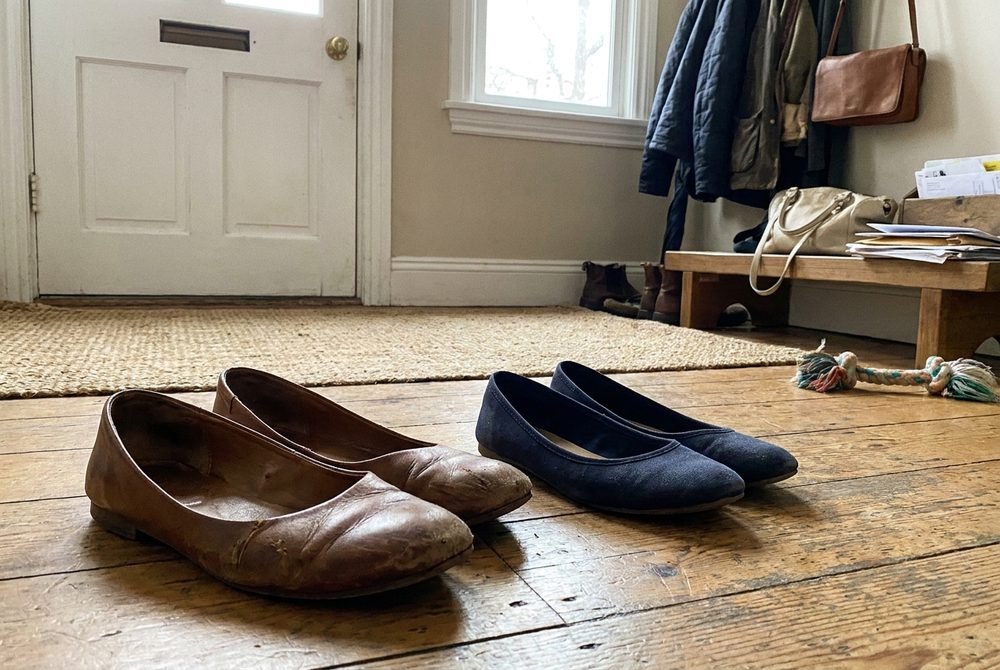
The pair you wore all spring goes on fine in the morning and feels wrong by three.
You start choosing shoes based on the time of day. You stop lacing them properly.
One evening you take them off in the car before driving home, because you can't face the last twenty minutes in them.
And it isn't only the shoes.
It's standing at the kitchen counter and shifting your weight every thirty seconds without deciding to.
It's the heaviness in your calves at nine at night that has nothing to do with how much you did that day. It happens on the days you did nothing, too.
Nobody warns you about this part. They warn you about the back, the sleep, the heartburn. Nobody tells you your feet stop being the same size they were that morning.
So you mention it. And everyone has a theory.
Drink more water. Cut back on salt. Put your feet up. Walk more. Walk less.
Every piece of advice quietly implies the same thing: that there's something you should be doing and aren't.
Here's the part that rarely gets explained. It changes how all of that advice looks.
It isn't about what you're doing
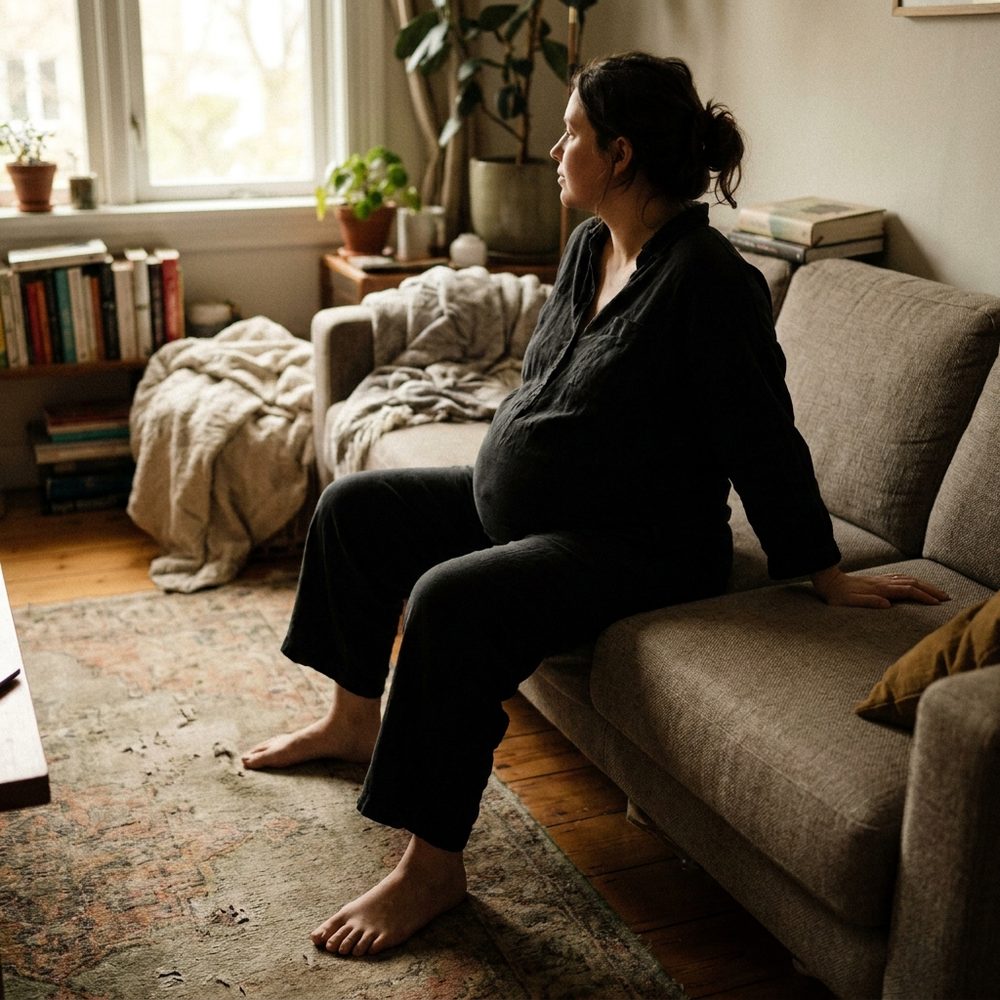
By the third trimester, your blood volume has risen substantially. Your body has been building up to that since the first trimester, because it's supplying two circulations instead of one.
That's not a problem. It's the job.
At the same time, your uterus is now sitting on top of the veins that carry blood back up from your legs. Not dramatically. Not dangerously. Just enough that the return trip gets slower.
So you have more fluid in the system, and a slower route back up from its lowest point.
Some of that fluid stays where gravity puts it, in your ankles and feet, and it collects there across the hours you spend upright.
That's the sock line. That's why your shoes fit at eight and don't at three.
Not because you skipped a glass of water.
It isn't hydration. It isn't salt. It isn't that you stopped moving enough. It's two normal, temporary things happening at once, and neither of them is something you're doing wrong.
Why the usual advice only half-works
None of it is wrong. It's just aimed at the edges of something mechanical.
What compression actually does
If the problem is that fluid settles at the lowest point because nothing is pushing it back up, the fix is something that pushes it back up.
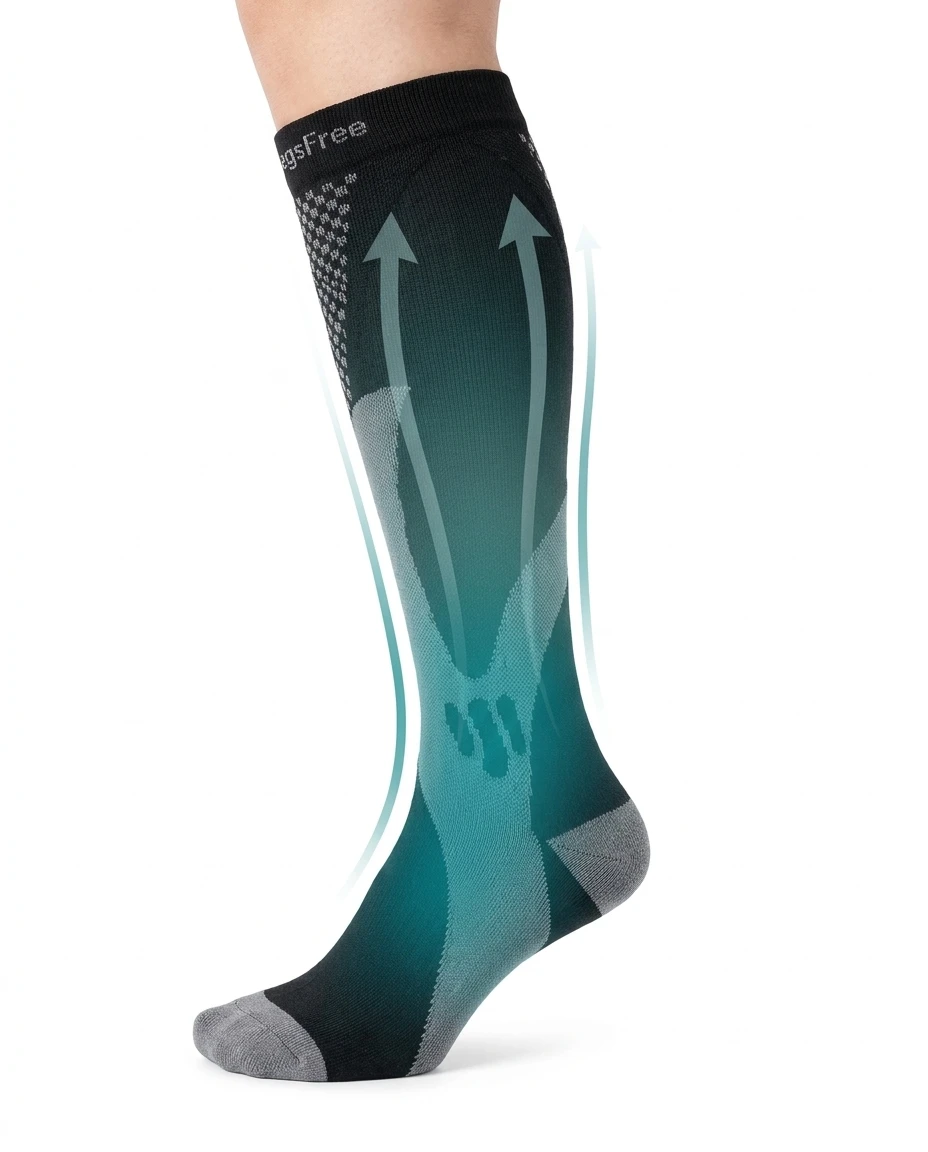
Graduated compression socks are tightest at the ankle and loosen as they go up the calf.
That gradient is the entire design. Instead of relying only on your calf muscles to move fluid upward, the sock applies pressure that's strongest at the bottom. So there's simply less room for fluid to pool where it usually pools.
The word "graduated" is doing real work there.
A sock that's tight all the way up, or tightest at the top, doesn't do this. It does the opposite: it leaves a band that traps fluid rather than moving it. That's why the tight socks already in your drawer don't help, and why they leave a mark.
It isn't a treatment for anything, and it doesn't change the pregnancy. It's a mechanical answer to a mechanical problem, and it works for the hours you're wearing it.
CHECK AVAILABILITY NOW »Here's how it works across your day
On before the swelling starts
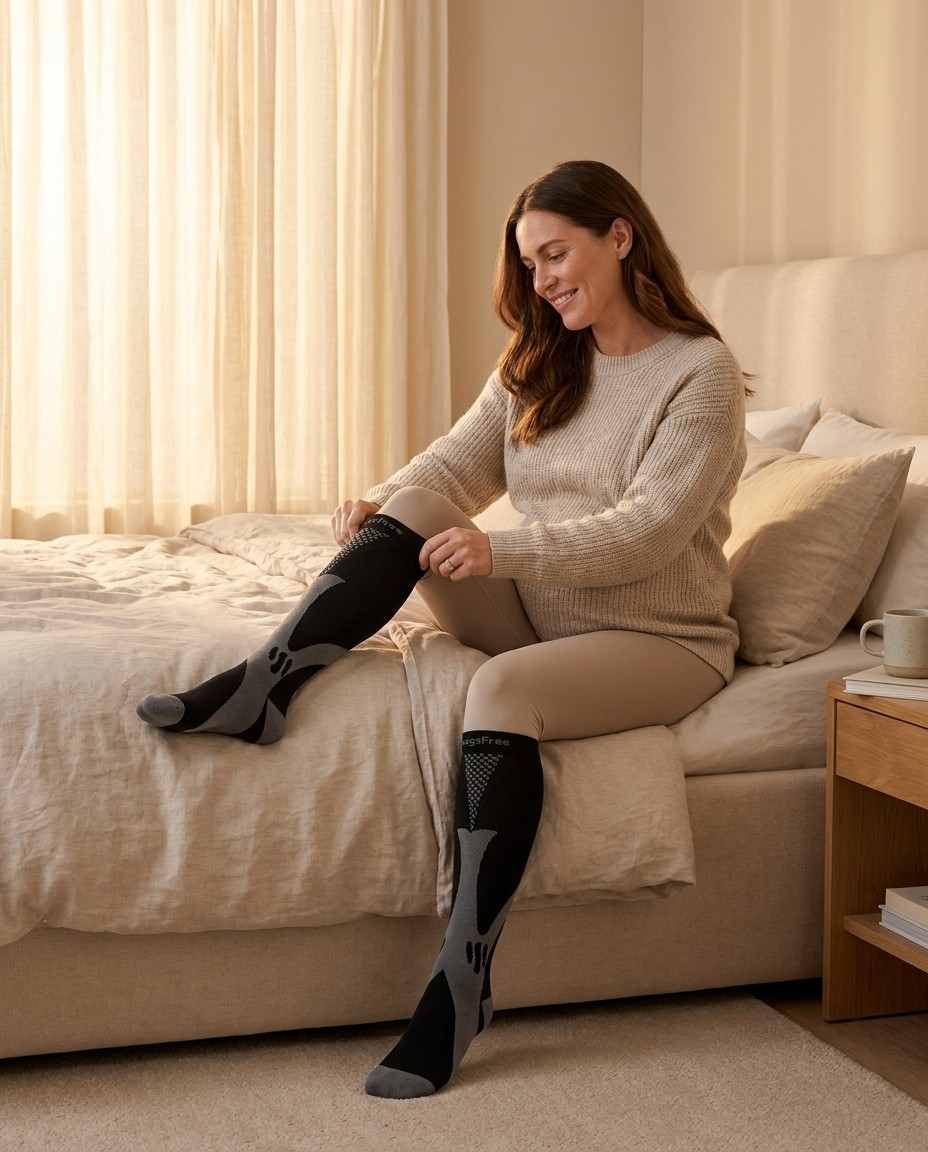
Put them on first thing, sitting on the edge of the bed, before you're up and about. Ankles that have already swollen are hard to get a sock onto, and the sock does more when the fluid hasn't got anywhere to go yet.
The gradient keeps things moving
Firmest at the ankle, easing up the calf. Through the standing, the errands and the hours at a desk, there's less room for fluid to collect at the bottom.
Your ankles look like your ankles
The shoes that stopped working start working again. The last hour before bed stops feeling like your legs are full.
Three things worth knowing before you buy any
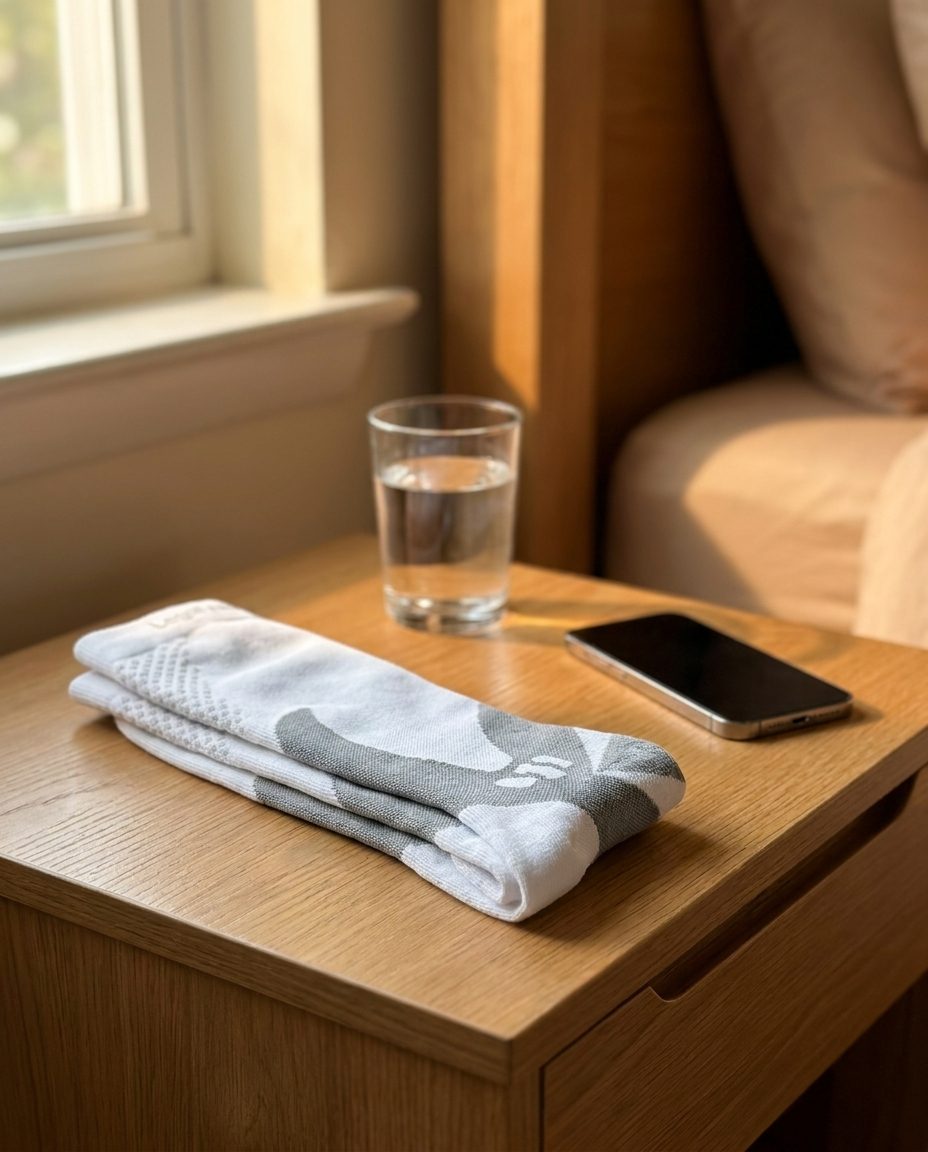
The one we recommend: LegsFree
After looking at what actually matters, one pair ticks all three boxes: LegsFree Support Socks.
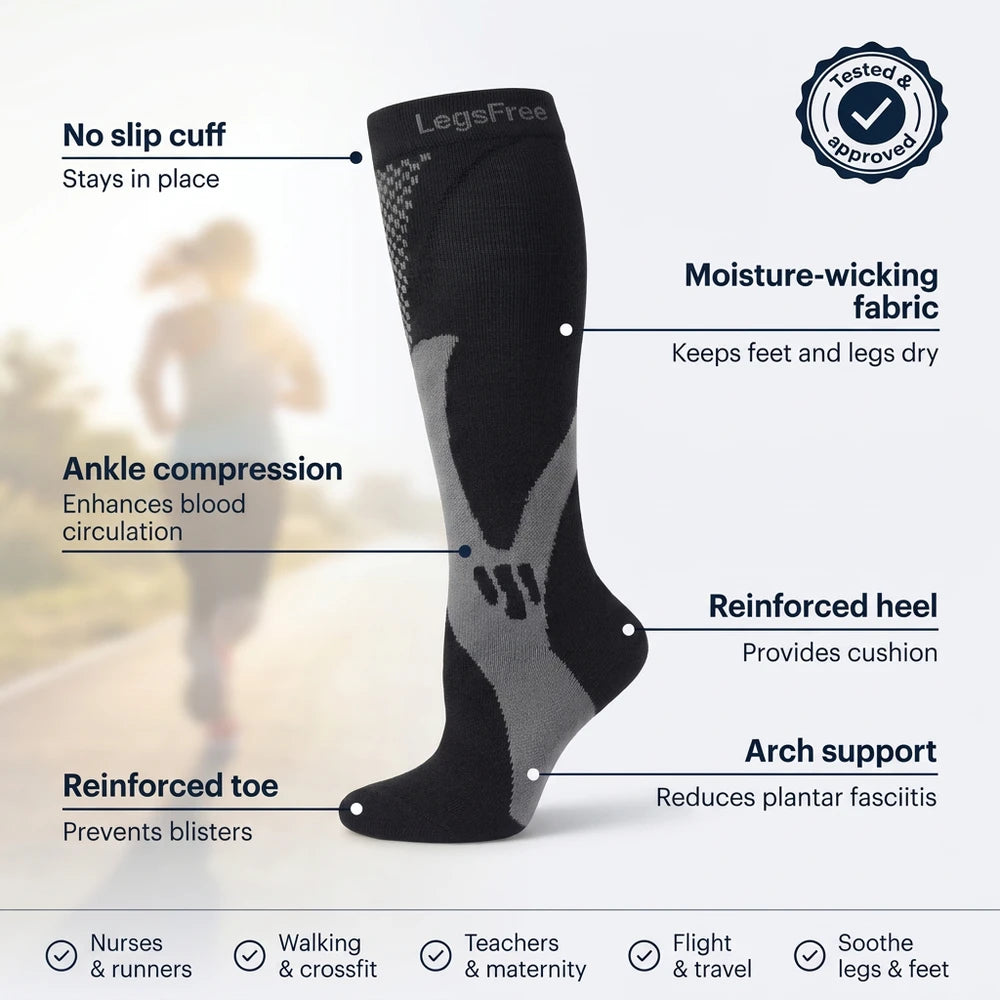
- Graduated 18–22 mmHg, firmest at the ankle, exactly the everyday range above
- Three sizes (US 5-8, 8-11, 11-14), so you can size up for the weeks ahead
- Knee-high, with a cuff designed to stay in place and breathable, moisture-wicking fabric
- Sold in multi-pair packs, so you can wash one pair and wear another
What the usual workarounds cost you
- Feet up on the sofa: fifteen minutes of relief against a twelve-hour day
- Shoes a size up: a pair you'll stop wearing the week after the birth
- Tight socks from your drawer: a band that traps fluid instead of moving it, plus a deeper sock line
- "Just push through it": the last weeks of your pregnancy spent thinking about your feet
Compare that with a pack of graduated socks you put on once in the morning and forget about.
Today's End of Summer Sale pricing
LegsFree is running its End of Summer Sale right now. The more pairs you take, the less you pay per pair. Most mums-to-be choose the 7-pack, so there's always a fresh pair while the others are in the wash.
Free shipping on every order. The 4-pack and 7-pack also come with a free mystery gift.
CHECK AVAILABILITY NOW »Risk-free, for the whole final stretch
You've probably tried a few things already that didn't do much.
So LegsFree backs every order with a money-back guarantee. Wear them through your normal days. If your ankles don't feel better at the end of the day, contact their customer service and get your money back.
The choice in front of you
Option #1: Keep going as you are. Choose your shoes by the time of day. Take them off in the car. Spend the last hour before bed with legs that feel full, and the last weeks of your pregnancy thinking about your feet.
Option #2: Put a pair on tomorrow morning. Graduated, 18–22 mmHg, the size you'll be in four weeks, on before the day starts. Then see how your ankles look at 3pm.
For the final stretch of a pregnancy, that turns out to be worth more than it sounds.
Here's exactly what to do next
- Click the green "Check Availability Now" button below.
- Pick your pack. Tip: take the 7-pack so you can rotate pairs through the wash.
- Pick your size. If you're between sizes, take the larger one.
- When they arrive, put a pair on first thing the next morning, before you're up and about.
Take care of yourself in the home stretch,
Claire Bennett
The Long Days
P.S. The single most useful thing in this article: put them on before the swelling starts. Sitting on the edge of the bed, first thing. That one habit changes how the whole day goes.
P.P.S. Size for the weeks ahead, not for today. Feet rarely go back down before the birth.
NOTE: Only available at legsfree.com. Not sold on Amazon or eBay.
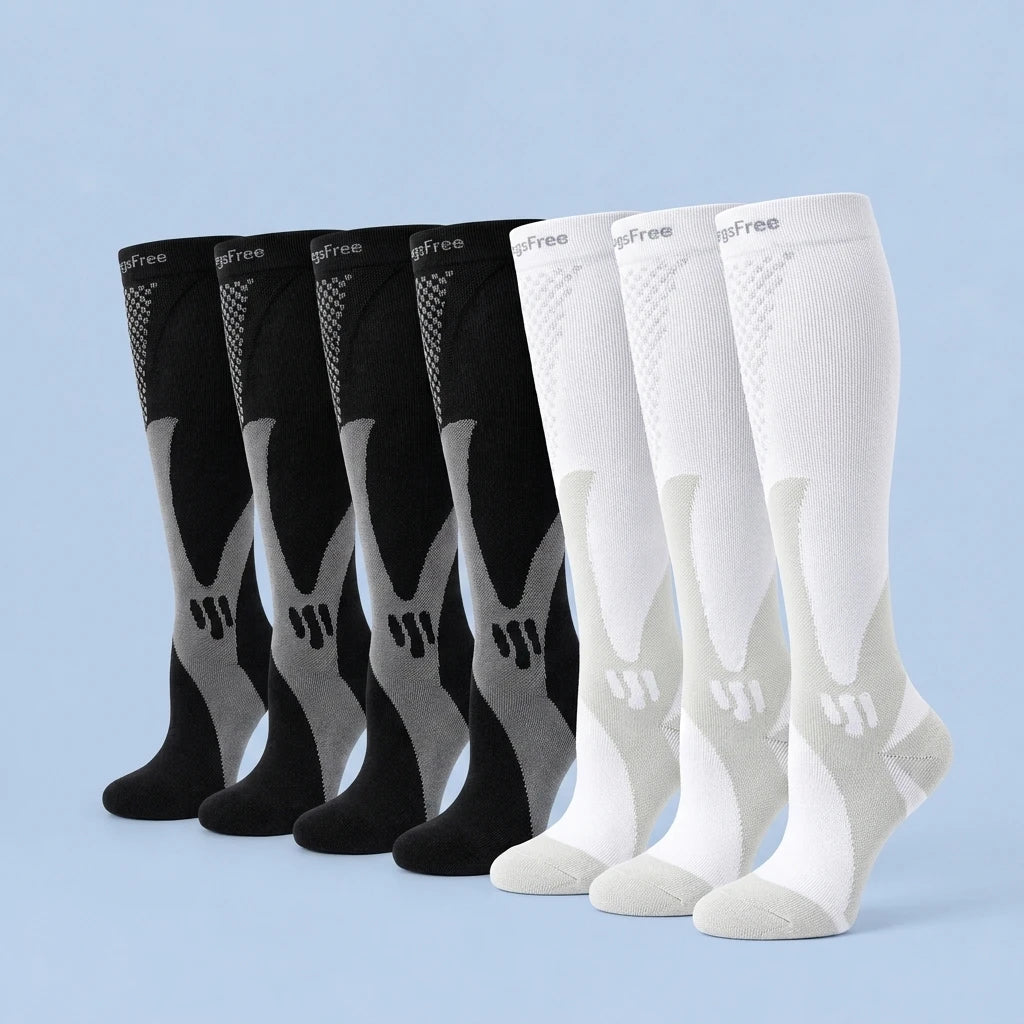
Buy 4 Get 3 Free
LegsFree Support Socks
7 pairs of graduated 18–22 mmHg compression socks for $69.99 $140.00. Free shipping.
Customer Reviews
HEALTH DISCLAIMER: General information, not medical advice. Graduated compression socks are not a treatment for any condition. Sudden swelling, or swelling with headaches or vision changes, should be raised with your midwife or doctor the same day. Ask them first if you have a circulatory condition, diabetes, or any skin or nerve problems in your legs. This article is an advertorial: a LegsFree publication.